
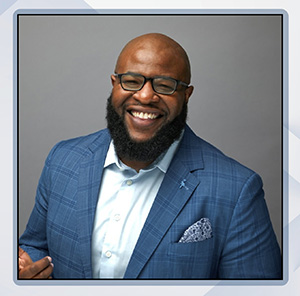
 Brandon Pope
Journalist, podcaster, and media critic
“Oscars Preview and the Future of Film”
In advance of the 98th Academy Awards ceremony, journalist and media critic Brandon Pope discusses the stand-out movies of 2025, his picks for Oscar-worthy performances, and which films he thinks were snubbed. He also explores how streaming has changed the film industry and the movie-watching experience, and whether we’re likely to ever see people return to theaters.
Brandon Pope is an Emmy-winning journalist, TV host, podcaster, and columnist, covering everything from politics to sports. He also reviews film and TV on his Substack, “Brandon Pope’s Screening Room,” and is the president of the Chicago chapter of the National Association of Black Journalists.
Brandon spoke to us on March 8, 2026.
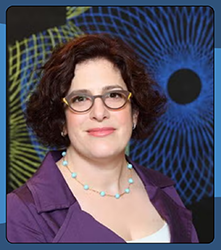 Jennifer Brier
History Professor, University of Illinois Chicago
“I’m Still Surviving: A Living Women’s History of HIV/AIDS”
I’m Still Surviving is a living women’s history of HIV/AIDS, led by professor Jennifer Brier of the University of Illinois Chicago. The project contains excerpts from 39 women’s oral history narratives about living with HIV/AIDS, raising questions about what “health” means and how we can live in a world that prioritizes wellness as a response to systemic violence and racism. In this program, Prof. Brier will discuss the project and how these women reclaim their power in the face of societal structures that work against them instead of helping them to thrive.
Jennifer spoke to us on February 22, 2026.
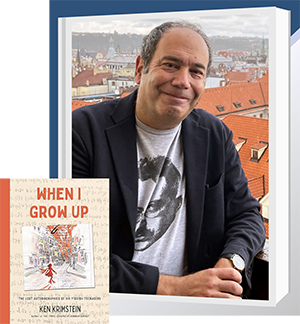 Ken Krimstein
Cartoonist, author, and educator
“When I Grow Up: The Lost Autobiographies of Six Yiddish Teenagers”
Acclaimed New Yorker cartoonist and author Ken Krimstein shares a powerful talk on his graphic nonfiction book When I Grow Up: The Lost Autobiographies of Six Yiddish Teenagers. Krimstein tells the extraordinary story of autobiographies written by Jewish youths in 1930s Yiddishuania (Lithuania) for a YIVO Institute contest. These manuscripts were nearly lost to history during the Nazi invasion before being rediscovered in 2017. Krimstein reveals how he transformed six of these long-forgotten voices into poignant narratives that capture both the aspirations of their young authors and the tragic loss of Yiddishuania’s culture in the Holocaust.
Krimstein also addresses the history of storytelling through cartoons, why he chose to go in that direction as an artist, and the increasing popularity of graphic novels.
Ken spoke to us on February 8, 2026. 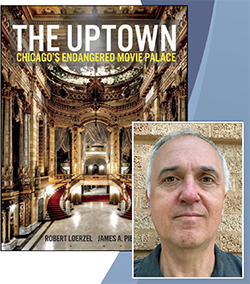 Robert Loerzel
“The Uptown: Chicago’s Endangered Movie Palace”
Author Robert Loerzel talks about his new book on the history of the Uptown Theatre. Opened a century ago, the Uptown is now in limbo, its beauty hidden behind a plywood barricade. Loerzel’s book offers a look inside the building, gathering the work of a dozen contemporary photographers with vintage blueprints, renderings, programs, and iconic photographs.
The Uptown tells the history of this theater that was “built for all time,” using original records and firsthand accounts to tell a story of dreamers, a changing neighborhood, and a nation stepping into a new world. As he offers insights into the building’s past and potential, Loerzel shares views of the Uptown Theatre throughout its ten decades.
Robert spoke to us on January 25, 2025.
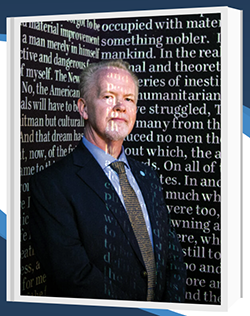 Carey Cranston
Executive Director of the American Writers Museum
“American Prophets: Writers, Religion & Culture”
Across time and tradition, prophets have been revered as voices with uncommon insight who guide us toward deeper understanding. Writers can share that same visionary spark–they’re not prophets in the religious sense, but their words reveal extraordinary awareness of the world around them, insight born of belief, experience, and imagination.
Carey Cranston returns to discuss the museum’s newest exhibit, American Prophets: Writers, Religion & Culture. The exhibit invites guests to learn how storytelling serves as a powerful lens for examining belief systems, personal identity, and the ever-evolving relationship between religion and American culture.
Carey spoke to us on January 11, 2026.
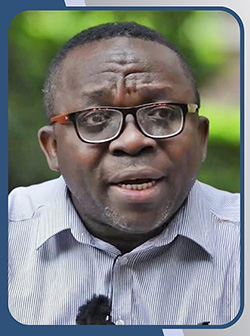 Leo Igwe
Human rights activist and founder of the Humanist Association of Nigeria
“Ending Witch Hunts in the 21st Century Requires a Global Approach”
Witch-hunting remains a persistent practice in contemporary Africa. Alleged witches, mainly women, children, and the elderly, face terrible abuses when they fall under suspicion of practicing witchcraft. Human rights advocate Leo Igwe will share data from Advocacy for Alleged Witches, a humanist group fighting these accusations, and he will highlight efforts to end witch hunts in the region. Igwe believes that humanist ethics provide a realistic framework to end witch-hunting in Africa.
Leo spoke to us on December 7, 2025.
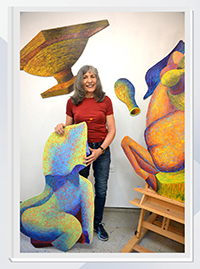 Joanna Pinsky
Co-founder of Art Encounter
“Unlocking Contemporary Art”
Joanna Pinsky, co-founder of Art Encounter, introduces the organization’s mission to connect people with art through education, outreach, and community projects, while also guiding us toward a richer appreciation of contemporary art. With her own works alongside pieces by other artists on hand, Joanna invites us to approach them with curiosity—asking questions, considering context and intention, and noticing choices of color, form, and materials. Through this interactive dialogue, she demonstrates how engaging with these elements can unlock meaning and make contemporary art more accessible, leaving audiences with greater confidence and appreciation.
Joanna spoke to us on November 16, 2025.
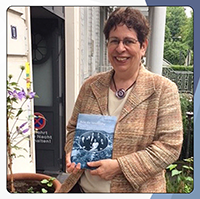 Judith Levi
Associate Professor Emerita, Northwestern University Linguistics Department
“Reconciliation and Forgiveness: Realities, Resistance, and Rewards”
Judith Levi returns to explore reconciliation and forgiveness, including how these concepts are both similar and different, and how to reap their profound rewards. Levi will make the case that understanding the challenges and rewards of reconciliation is essential to the well-being of every society wishing to transcend past harms. This talk will present the major lessons Levi has learned from her 25 years of involvement in German-Jewish dialogue and German-Jewish reconciliation.
Judith spoke to us on November 2, 2025.
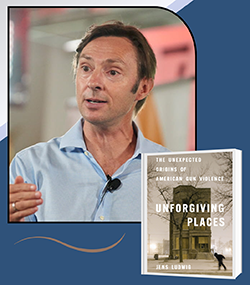 Jens Ludwig
Director of the University of Chicago’s Crime Lab
“How to Stop Gun Violence Before It Starts”
For the past 25 years, U of C professor Jens Ludwig has examined why gun violence happens and what we can do about it. In his new book, Unforgiving Places: The Unexpected Origins of American Gun Violence, Ludwig discusses why we’ve been thinking about the gun violence problem in the wrong ways. He explains that most shootings are not premeditated. Rather, they are the result of arguments that escalate into violence. Using data-backed interventions from behavioral economics, Ludwig shows that the problem is not as hopeless as we have long thought, once we understand the problem itself correctly.
Jens spoke to us on October 19, 2025.
 Kevin Schultz
Professor and Chair of the UIC Department of History
“Why Everyone Hates White Liberals (Including White Liberals)“
Historian Kevin M. Schultz says that “how you define a ‘white liberal’ is less a reflection of reality and more a Rorschach test revealing your own anxieties.” Schultz, author of a new book called Why Everyone Hates White Liberals (Including White Liberals), shares the fascinating history of the uses and abuses of modern liberalism. He explains why so many Americans claim to believe in the principles of liberalism, including freedom, equality, and equal opportunity, while denying they are “a liberal.” Schultz asserts that it’s time for a new way to describe this kind of politics.
Kevin spoke to us on October 5, 2025.
 Khadine Bennett
Director of Advocacy and Intergovernmental Affairs with the ACLU of Illinois
“Building a Firewall to Safeguard Democracy”
States and cities are now on the front lines of upholding our rights. Khadine Bennett of the American Civil Liberties Union of Illinois tells us about their “Building a Firewall” campaign, which seeks to ensure that officials do not voluntarily assist in attacks on our civil liberties and rights. The ACLU of Illinois is working at every level of government in the state – from the legislature, to county boards, to city halls – to make sure Illinois remains a place where rights are protected and expanded. She also shares opportunities for us to support their campaign to guarantee our civil liberties and address threats.
Khadine spoke to us on September 21, 2025.
 Jake Via
Organizing Director for the American Humanist Association
“Cultivating Connections”
Building strong communities is an ongoing effort. Jake Via of the American Humanist Association focuses on energizing humanist communities to help them grow and thrive. In this session, Jake will share his diverse experiences in organizing communities, and he’ll discuss actionable tools for your next chapter. We will explore inspiring, practical ways to deepen engagement, attract new members, and foster the vibrant humanist collective that so many are searching for—a place of friendship, chosen family, and meaning.
Jake spoke to us on September 7, 2025.
 David Overby-Rolston
“The Jazz Clubb: The Art of Listening to Jazz”
Jazz is a uniquely American art form with deep roots in cross-cultural exchange. EHS member Dave Rolston tells us about The Jazz Clubb radio show on Kenosha public radio station WGTD. He then presents the latest episode.
Dave spoke to us on August 24, 2025.
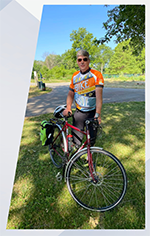 Charlie Saxe
“The Grand Illinois Bike Tour: Biking Across Illinois”
EHS member Charlie Saxe tells us why he thinks that one of the best ways to visit Illinois—or anywhere—is by bike. Charlie takes us on a virtual ride throughout the Prairie State on the Grand Illinois Bike Tour, and more, over the past six years. He tells of the delights of Casey, the awe of Cahokia, the Deere revolution, and the love of the American road along Route 66. Charlie hopes this virtual tour will inspire you to hop on your own bike and explore the Land of Lincoln.
Charlie spoke to us on August 10, 2025.
 Katie Merrell
“How Current Public Policies Affect People in the Real World”
EHS member Katie Merrell is a federal contractor who works closely with staff at the Medicare agency. She is also an active member of the local mutual aid network that has been providing support to newly arrived migrants in Chicago. Katie reports from the front lines on both the current administration’s approach to governance as well as specific policy initiatives. She reflects on the profound effects she has seen on individuals who are impacted by these policies, including civil servants and migrants, as well as the Medicare program and the city of Chicago.
Katie spoke to us on July 27, 2025.  Sapphy Lore
“Two Books Out in One Year: An Indie Author’s Journey”
Sapphy Lore is a Chicago-based author who published her debut novel, Mother Revolution, in January, 2025. It was once a story sitting in an unclicked save file, and it took writing a completely separate trilogy before Sapphy felt brave enough to begin self-publishing Mother Revolution. Sapphy will talk about the long tale of her unexpected inspirations and how both stories came to be. She will also reveal the title for her fantasy book coming out in November, 2025.
She spoke to us on July 13, 2025.
 John Ungashick
“Kennedy vs. Nixon: the 1960 Presidential Election”
EHS member John Ungashick will examine the U.S. presidential election of 1960. He’ll discuss the early lives of candidates John F. Kennedy and Richard Nixon, the primary campaigns leading up to the Democratic and Republican nominating conventions, and the campaigns that culminated in Kennedy’s razor-thin victory on November 8, 1960. Kennedy’s tragic assassination in 1963 launched a vision of his administration as a golden age, or “Camelot,” that was cut short by his death. John will share his theory on this myth, and whether subsequent history would have been very different if Kennedy’s presidency had continued.
John spoke to us on June 29, 2025.
 Ray Berg
“Legacy of “The Red Squad”: Enemies of the State”
On November 10th, 1975, a Grand Jury in Chicago released a report that exposed a multiyear initiative by the Chicago police to spy on organizations deemed a threat to law and order. These overwhelmingly progressive organizations were spied on, harassed, and even pressured into violent acts by those sworn to protect and serve. One such organization was the Ethical Humanist Society of Chicago.
Ray discusses findings from the Society archives, what we know about the spying effort, ane what lessons have we learned. In the discussion, we begin to consider what happens when the quest for “law and order” pits law enforcement against citizenry.
Ray spoke to us on June 15, 2025.
 Miles Harvey
Professor and Director of DePaul Publishing Institute and founding editor of Big Shoulders Books
“Writing the Void: The Role of Absence in Storytelling”
Miles Harvey’s new book of short stories, The Registry of Forgotten Objects, has been called “compelling and surprising” by the Chicago Tribune. In this talk, he examines the ways in which writers build stories out of things not there—missing people, lost dreams, misplaced memories and narrative gaps, as well as various other specters, shadows, hallucinations and dark holes. He also discusses the mission of his nonprofit, social justice-focused press, Big Shoulders Books.
Miles spoke to us on May 4, 2025.
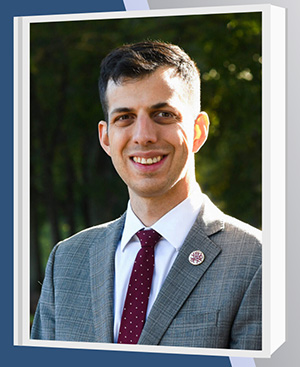 Chris Kessler
Director of Policy at Openlands Illinois
“Preserving Our Habitat and Environment, Earth Day and Every Day”
Chris Kessler, policy director at Openlands Illinois, joins us to discuss their mission: to protect the natural and open spaces of northeastern Illinois and the surrounding region to ensure cleaner air and water, protect natural habitats and wildlife, and help balance and enrich our lives.
He will guide us through some of Openlands’ conservation policy initiatives from the past year, including: successful ballot measures securing funding for our region’s forest preserves and conservation areas, reimagining the IL Route 53 corridor as a greenway, and the passage of the Homeowners’ Native Landscaping Act.
Chris spoke to us on April 13, 2025.
 Fish Stark
Executive Director, American Humanist Association
“Humanists Move America: Why Humanists are Heroes in the American Story”
Now more than ever, people need to feel like heroes in the American story. Fish Stark, Executive Director of the American Humanist Association, blends history, humor, and cognitive psychology in a look back at the legacy of American heroes. From John Dewey and Frederick Douglass to Jamie Raskin and Quinta Brunson, these people have changed our country for the better—fairer, more equal, more open, more innovative—not by mere coincidence but because of their humanist beliefs. Fish offers a framework for helping humanists renew our sense of connection to national identity at a moment where our national leaders embrace anti-humanist principles.
Fish spoke to us on March 30, 2025.
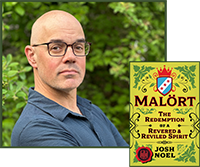 Josh Noel
Food and Beverage Journalist and Author
“Malört: The Redemption of a Revered and Reviled Spirit”
Known primarily for its intense bitterness, Malört, the infamous Chicago liqueur, has been compared to “a forest fire, if the forest was made of earwax.” Josh Noel, author of Malört: The Redemption of a Revered and Reviled Spirit, discusses the history of this Swedish spirit that some consider the unofficial liqueur of Chicago. As a beer expert and former food writer for the Chicago Tribune, he brings us his unique perspective regarding this unconventional beverage. Josh tells us how Malört came to be seen as Chicago’s signature drink almost a hundred years after a Swedish immigrant first introduced it.
Josh spoke to us on March 16, 2025.
 Sara Shacter
Children’s book author
“The Magic of Writing for Children“
Sara Shacter shares that “to [her], there is nothing more joyful than writing for kids. Children’s literature is steeped in kindness, insight, silliness, empathy, wonder, and hope. It is a great gift – and profound responsibility – to write for the best audience ever.” In her presentation, Shacter talks about her career as a children’s book author, the collaboration between an author and an illustrator, the research required for kids’ nonfiction, and many other aspects of children’s publishing. Our Humanist Kids program joined us for the beginning of the program, when Sara read a story and shared some of her behind-the-scenes secrets of storytelling with the kids and adults alike.
Sara spoke to us on March 2, 2025.

Sydney Doe, MD
Family Physician & Family Medicine Residency Core Faculty
“From Coverage to Care: America’s Insurance History and the Case for Single-Payer”
Physicians for a National Health Program (PNHP) advocates for a universal, comprehensive, single-payer national health program. With over 25,000 members and chapters across the United States, PNHP is at the forefront of this movement. Sydney Doe, MD explores the complexities of the U.S. healthcare system, tracing its evolution, comparing it to systems in other countries, and examining key components such as Medicare Advantage, Medigap plans, and the Affordable Care Act.
Dr. Doe spoke to us on February 16, 2025.
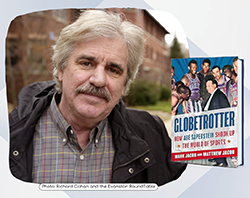 Mark Jacob
Journalist and author
“Born in Chicago: The Roots of the Harlem Globetrotters”
The original Harlem Globetrotters weren’t from Harlem, and they didn’t start out as globetrotters. The talented all-Black team, started by Jewish immigrant Abe Saperstein, was from Chicago’s South Side and toured the Midwest in Saperstein’s model-T. But with Saperstein’s savvy and the players’ skills, the Globetrotters would become a worldwide sensation. Mark Jacob, co-author of Globetrotter: How Abe Saperstein Shook Up the World of Sports, shares the story of the tireless work and impressive achievements of a man and a basketball team that made millions of people laugh, gasp, and applaud at their astounding performances.
Mark spoke to us on February 2, 2025.
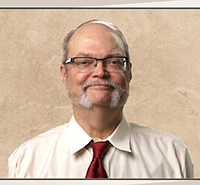 Ray Long
Chicago Tribune investigative reporter
“Exposing the Legendary Culture of Corruption in Illinois Politics”
What makes Illinois so corrupt? Four of the last 11 governors have gone to prison, and scores of judges, state lawmakers, Chicago aldermen, and other officials have been found guilty of persistent corruption. In the Chicago Tribune’s ongoing series “Culture of Corruption,” investigative reporter Ray Long explores decades of government and political corruption in Illinois and attempts to explain why corruption continues to poison virtually every level of government in our state.
Ray spoke to us on January 19, 2025.
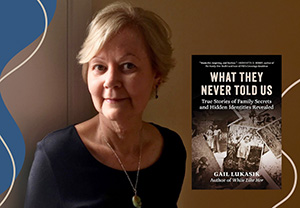
Gail Lukasik
Author and speaker
“What They Never Told Us: Family Secrets and Hidden Identities”
Gail Lukasik returns to explore the big questions: Who are we? What is family? Her new book, What They Never Told Us: True Stories of Family Secrets and Hidden Identities Revealed, delves into the trauma of uncovering a hidden family secret. In it, she tells the stories of people who made extraordinary, life-changing discoveries about their parentage and/or race and ethnicity that fractured their identities. With all the twists and turns of a mystery novel, Gail shares how these discoveries were made, why they were kept secret, and the arduous, sometimes disappointing, quests to find the biological parent or parents.
Gail spoke to us on January 5, 2025.
 Susan Jarzembski
Director of Partnerships & Special Projects at Mejdi Tours and InterAct
“Mejdi Tours and InterAct: Harnessing the Power of Travel to Create a More Peaceful World”
Susan Jarzembski discussed Mejdi Tours’ unique approach to socially responsible travel and the many projects undertaken by InterAct (the nonprofit arm of Mejdi Tours), including empowering Palestinian women through scholarships and educational opportunities and providing humanitarian aid for families impacted by war and conflict. Susan shared how a trip to Israel/Palestine brought about a transformative experience, one that can change the way people approach conflict—at work, in the community, and at the kitchen table. She discussed how local communities are supported by this responsible approach to travel, and she shared stories of connection from around the world. Learn about the MEJDI method of listening—aiming to respectfully listen to whoever you meet wherever you go, and the Dual Narrative approach to travel.
Susan spoke to us on December 8, 2024.
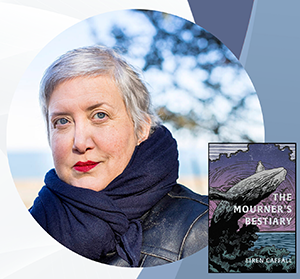
Eiren Caffall
Eiren Caffall’s memoir, The Mourner’s Bestiary, is a book about the complex connections between the human body and the natural world. It is a meditation on grief and survival told through the stories of animals in two collapsing marine ecosystems — the Gulf of Maine and the Long Island Sound — and the lives of a family facing a life-threatening illness. Eiren will discuss the lessons taken from her own story as a lens to find hope for us all in a collapsing world
Eiren spoke to us on November 17, 2024.
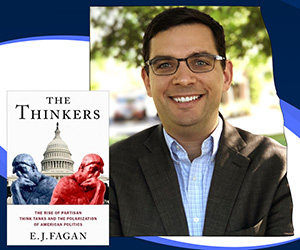
E.J. Fagan
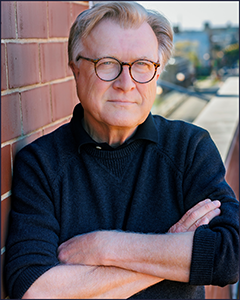
Mark Larson
Inspired by Studs Terkel’s classic, Working, and commemorating its 50th anniversary, Mark Larson’s latest book, Working in the 21st Century: An Oral History of American Work in a Time of Social and Economic Transformation, delves into the perspectives of 103 of today’s workers, providing a contemporary lens on working amid this socially turbulent and uncertain landscape. He will talk about his personal experience as a Terkel interviewee for Race and Hope Dies Last, and will share select recordings from his interviews, which provide intimate glimpses into diverse viewpoints on how these tumultuous times are shaping our understanding of modern work.
Mark spoke to us on October 20, 2024.
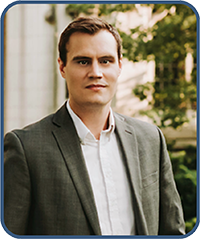
Russell Johnson
Russell P. Johnson studies religious ethics and the philosophy of communication. In his presentation, he will explore how popular movies, including 101 Dalmatians, Jaws, The Dark Knight, and Black Panther, depict heroes and villains and shape their viewers’ moral imaginations. Drawing from rhetorical theory, Christian theology, and peace and conflict studies, Russell explores how the “good guys versus bad guys” mindset distorts people’s perceptions of themselves and their opponents.
Russell spoke to us on October 6, 2024.
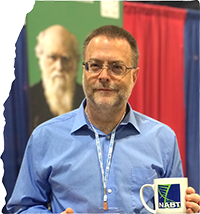
Glenn Branch
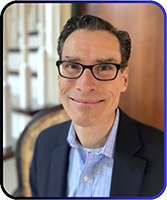
Steven Schwinn
According to a recent poll, only 47% of Americans now express a favorable opinion of the Supreme Court, while 51% have an unfavorable view—a three-decade low. Broken down by party lines, only 24% of Democrats, but 73% of Republicans have favorable views.
Steven Schwinn addressed this growing mistrust of the Supreme Court and concerns about its possible role in any legal challenges to the election.
Steven spoke to us on September 8, 2024.
Tim Franklin
Tim Franklin has been the top editor of three metropolitan newspapers, The Indianapolis Star, the Orlando Sentinel and The Baltimore Sun. He now heads up the Medill Local News Initiative, a research-and-development project designed to bolster the sustainability of local news in America. He’s also a member of Illinois’ Local Journalism Task Force, created in 2022 to explore ways the state could help revive journalism. Franklin will speak on the strategies being implemented to save local news.
Tim spoke to us on May 19, 2024.

Kevin Pang
Kevin Pang’s debut book, A Very Chinese Cookbook: 100 Recipes from China and Not China (But Still Really Chinese) was named one of the best cookbooks of 2023 by the New York Times. A James Beard Award-winning food writer, he also co-hosts the cooking series “Hunger Pangs” with his father, Jeffrey Pang. Kevin will share how cooking helped him grow closer with his father and connect with his heritage.
Kevin spoke to us on April 28, 2024.
Jennifer Walling
Jennifer spoke to us on April 14, 2024.
Doug Fraser
Homelessness has risen to record levels in the United States, with Chicago and Illinois part of that trend. Advocates estimate more than 68,000 people in Chicago are unhoused. Doug Fraser, executive director of Chicago Help Initiative, a nonprofit that serves the unhoused, will discuss workable strategies to prevent homelessness. He’ll also discuss the “Bring Chicago Home” referendum on the March 19 ballot, as well as how the migrant crisis has impacted the situation for the city’s unhoused.
Doug spoke to us on March 17, 2024.
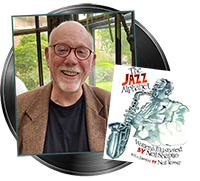
Neil Shapiro
Chicago illustrator Neil Shapiro discussrf his professional path as an artist, from advertising, to teaching, to pursuing his passion for jazz through creating a jazz-themed art book. Shapiro spoke on his unexpected and fulfilling journey and talked about his book, The Jazz Alphabet, in which Shapiro’s portraits and words honor jazz legends along with many lesser-known musicians.
Neil spoke to us on March 3, 2024.
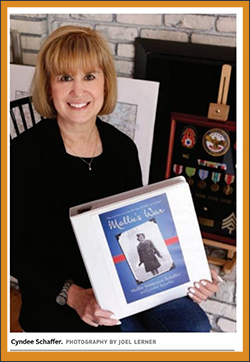
Cyndee Schaffer
Cyndee Schaffer, co-author of the award-winning book Mollie’s War, and past president of the Midwest Writers Association, discusses women in the military during WWII by taking us on a journey from inspiration to publication. Using excerpts from her mother’s letters written home, Cyndee provides a romantic yet frightful glimpse into the life of a woman in uniform during this crucial time in history. She traces the footsteps of her mother and her fellow WACs (Women’s Army Corps) who followed the male soldiers stationed in Europe from London to Normandy to Paris to Versailles and to Frankfurt (with the Army of Occupation). And Cyndee shares her mother’s description of finally seeing the Statue of Liberty upon her return home in November 1945.
Cyndee spoke to us on Feb 18, 2024.
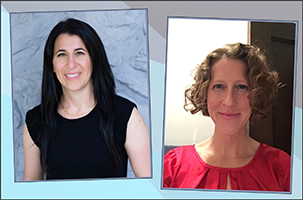
Jenny Schaffer and Jenn Torres
Over the past year, more than 30,000 migrants from South and Central America have been sent to Chicago. To examine the city’s response to this influx, EHS member Katie Merrell interviews Jenn Torres and Jenny Schaffer, active volunteers in the mutual aid network that evolved to support folks staying at a North Side Chicago police station and at area shelters. As happened throughout the city, this group organized efforts to provide basic needs to their new neighbors. Jenn and Jenny share their perspective working within the informal migrant support network and provide insights into how city, state, and federal policy helps and hinders peoples’ ability to find success in their new city.
Jenn and Jenny spoke to us on Feb 4, 2024.
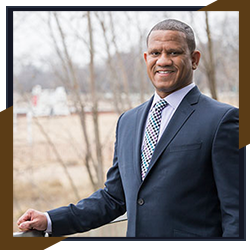
Alvin B. Tillery, Jr.
In 2019, Evanston became the first city in the country to approve a government-funded reparations program, which is meant to address the housing discrimination its Black residents faced between 1919 and 1969. Alvin B. Tillery Jr., director of the Center for the Study of Diversity and Democracy and a professor of political science at Northwestern University, discussed the results from the Evanston Reparations Research Collaborative’s community survey of Evanston, Evanston’s unique approach to debating, legislating, and funding its reparations ordinance, and how the Evanston model can help other cities design popular racial equity programs.
Alvin B. Tillery, Jr.’s research and teaching interests are in the fields of American politics and political theory.
Prof Tillery spoke to us on Jan. 21, 2024
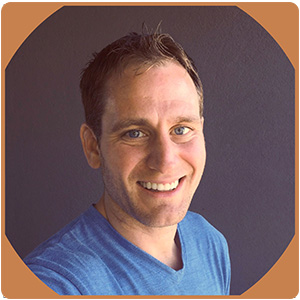
Andrew Szilva
Ranked choice voting (RCV) — also known as instant runoff voting (IRV) — allows voters to rank candidates in order of preference. Proponents say that RCV means better choices, better campaigns, and better representation. More than a dozen states have adopted some level of ranked choice voting. In 2025, Evanston will become the first municipality in Illinois to enact this method of voting. Andrew Szilva, executive director of FairVote Illinois, a nonpartisan organization advocating for ranked choice voting, joined us to explain how this voting method works and how it might impact politics in America.
Andrew Szilva joined FairVote Illinois in 2019 and became the organization’s executive director when it incorporated in 2020.
Andrew spoke to us on Jan. 7, 2024
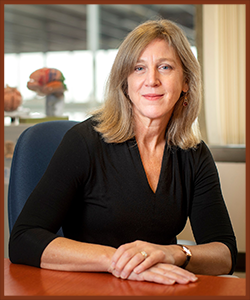
Lise Eliot
According to Lise Eliot, Professor of Neuroscience at Rosalind Franklin University, expectant parents have it wrong when they celebrate the “gender reveal” of their fetus. Her research has found that sex is determined prenatally, but gender emerges gradually, throughout childhood and, in some ways, throughout life. In her talk, Dr. Eliot will contrast the biology that gives rise to “sex” versus “gender” and combat claims about “hardwired” gender attributes from all sides of the ideological spectrum.
Dr. Eliot’s studies range from cellular neurophysiology to meta-analyses of brain sex difference and include two highly praised books, What’s Going On in There? How the Brain and Mind Develop in the First Five Years of Life, and Pink Brain, Blue Brain: How Small Differences Grow Into Troublesome Gaps.
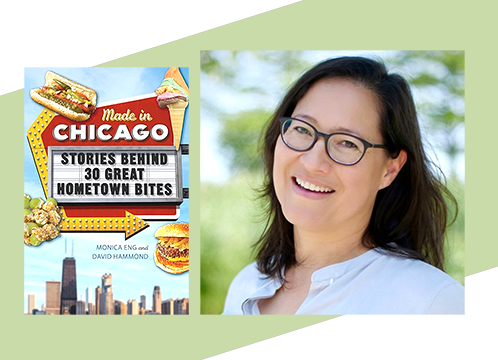 Monica Eng
“Made in Chicago: Exploring the City’s Diverse Food Landscape”
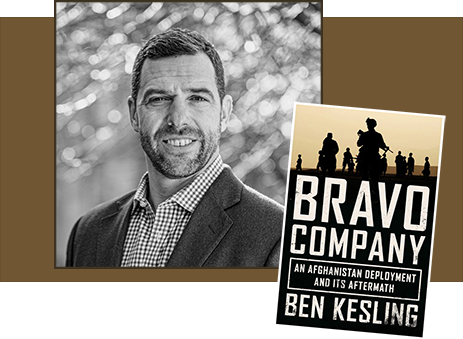
Ben Kesling
Ben Kesling, Midwest correspondent for The Wall Street Journal who also covers veterans’ affairs and national security, discussed his book Bravo Company, which tells the story of war in Afghanistan through the eyes of the men of one unit, part of a parachute infantry regiment in the 82nd Airborne Division. A decade ago, the soldiers of Bravo Company deployed to Afghanistan for a tour in Kandahar’s notorious Arghandab Valley. By the time they made it home, three soldiers had been killed in action, a dozen more had lost limbs, and nearly half of the company had Purple Hearts.
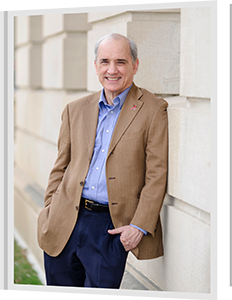
Dan Barker
“Is the Separation of Church and State Coming to an End?”
Dan Barker, Co-president of the Freedom From Religion Foundation, co-host of Freethought Radio and Freethought Matters, and co-founder of The Clergy Project, shared the history and the work of the Freedom From Religion Foundation, and discuss its current challenges, particularly in light of the new conservative courts.
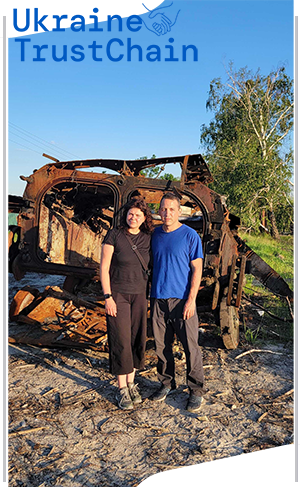 Daniil Cherkasskiy & Kseniia Kalmus
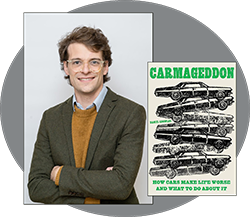
Daniel Knowles
Daniel Knowles, Midwest correspondent for The Economist, discussed his recent book, Carmageddon: How Cars Make Life Worse and What to Do About It.
He contends that while the automobile is one of the most miraculous inventions of the 20th century, it has fueled climate change, caused millions of deaths and injuries, and wasted our time and money. Knowles shows us that there are better ways to live by examining such places as Amsterdam, Copenhagen, Tokyo, and New York City.
Drew Bekius
“How Humanism Saves the World”
Gary Greenberg
“Is Psychology a Social or a Natural Science?”
Retired developmental psychobiology professor Gary Greenberg spoke about the notion of genetic determinism, and why the brain doesn’t count as much as many believe. According to Greenberg, behavior and intelligence are not inherited, but are developed, beginning from the moment of conception. He critiqued the idea that psychology is not a social science but rather a natural science, much like physics and chemistry.
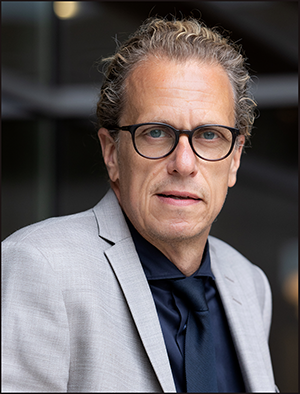
Christian Leuz
There is vigorous debate about the safety and environmental impact of hydraulic fracturing, commonly known as fracking. This process is highly controversial, with defenders citing the benefits of accessible hydrocarbons and opponents pointing out the danger in leaking millions of tons of methane, a greenhouse gas more potent than carbon dioxide. Chicago Booth Professor Christian Leuz describes his research on the impact of fracking on surface water, including a discussion of whether new rules mandating certain disclosures might make the practice cleaner. He places this work in the broader debate about increased transparency in environmental, social, and governance reporting.
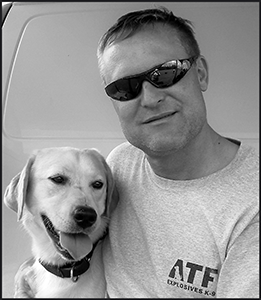
Mitch Wido
Dogs are vital to police work, with an ability to smell between 10,000 to 100,000 times better than humans. Mitch Wido, retired Senior Special Agent with the U.S. ATF, described how explosives detection dogs are trained to recognize hundreds of different types of explosives and weapons. He explained how law enforcement officers use their K-9 partners to identify threats to the public. Mitch was accompanied by Illinois State Police Trooper (Ret.) Brian Kelliher and his K9 partner, Rosie, to demonstrate how these animals detect potentially dangerous material.
Mark Larson
“I hate spunk!” Ed Asner as Lou Grant famously growled at Mary Richards on the first Mary Tyler Moore Show in 1970. “It’s ironic that I’m still known for that line,” Asner later would say, “because I actually love spunk.” Whether you call it spunk, spirit, boldness, intemperance, or belligerence, it was a driving force behind Asner’s long, storied career both on and off the screen. And it would be a double-edged sword. In 1985, for example, his unyielding and public criticism of Reagan’s policies in Central America arguably caused the cancellation of The Mary Tyler Moore Show spin-off, Lou Grant. Author and oral historian Mark Larson will draw on the numerous recent interviews he conducted with Asner, his family, and colleagues for this talk on the perils of being Ed Asner.
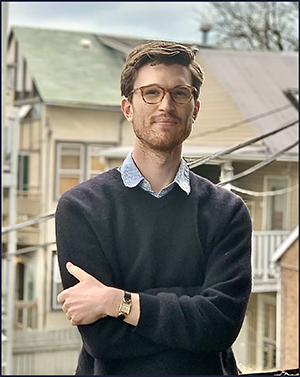
Austin Berg
For all the wrong reasons, a national spotlight is shining on Chicago. The city has become known for its violence, police abuse, parent and teacher unrest, population decline, and mounting municipal and pension debt. However, these problems that seem unique to Chicago have been encountered elsewhere. Austin Berg, co-author of The New Chicago Way: Lessons from Other Big Cities (2019), shares some successful solutions that other cities have embraced. Pragmatic and non-ideological, the findings detailed in the book have implications for the choices the voters will make in the upcoming mayoral election.

Bethany Barbouti
Bethany Barbouti, co-owner of The Eco Flamingo, believes that sustainable living should be accessible to everyone!
The Eco Flamingo is a new zero-waste general store in Chicago that strives to provide the most environmentally responsible options for their products and operations, prioritizing plastic and package-free goods to reduce packaging waste. Bethany discussed the challenges and successes of sustainable shopping — what is going well, what needs to improve and how we can get there.
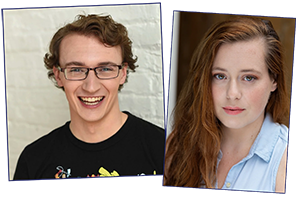
Martin Downs and Jennifer Mohr
The Italian theatrical style of “Commedia dell’Arte” rose to prominence in the mid-1500’s, and continues to delight and surprise audiences even in the 21St Century. Join Martin Downs, Artistic Director, and Jennifer Mohr, Education Director of Chicago’s Laughing Stock Theatre ensemble for a look at where the Commedia came from, how it works, and why it retains its relevance even in 2023.
 Paula Epstein
Paula Epstein wants to help us to get more comfortable talking about death and dying! In this talk, she will explain her various roles and experiences as a hospice volunteer, a certified nursing assistant, and an end-of-life doula. She will explore the skills involved, and how these services can offer deep support to patients and their loved ones. Most importantly, she will share what this work has taught her about the death and dying experience.
 Jason Torpy
Jason Torpy will speak to us about his work with fellow atheists in the military, the efforts to introduce more humanist chaplains, and the opportunities for local volunteers to make a difference. He will speak from his experience as a prior board member on several national humanist organizations and as a former Army Captain and West Point graduate. He will also share the perspectives of thousands of atheists in foxholes he’s worked with as president of the Military Association of Atheists & Freethinkers. Jason will share his knowledge on local VA hospitals, enlistment centers, and the local training base.
Jason spoke to us on December 4, 2022.
 Dr. Ava Thompson Greenwell
Before the Black Lives Matter Movement, there was the Free South Africa Movement. Chicago activists played a major role in putting pressure on the South African, Illinois, and Chicago governments to end their support of apartheid.
Northwestern University Journalism professor Dr. Ava Thompson Greenwell joins us for a viewing and discussion of her documentary Mandela in Chicago. The film chronicles Nelson Mandela’s historic visit to Chicago in 1993 and features footage and interviews from Chicago and South African activists.
 Don Zminda
One hundred three years after it happened, the Black Sox Scandal—in which Chicago White Sox players conspired with gamblers to throw the 1919 World Series—continues to fascinate sports fans, American history fans, and fans of true-crime stories. The case is still being investigated, and much new evidence has been uncovered in recent years. Retired sports broadcaster, statistician, and author Don Zminda presents research which indicates that members of the team continued to throw games during the 1920 season. He also discusses how no one involved in the case, including White Sox management and the teammates of the conspirators, was truly innocent.
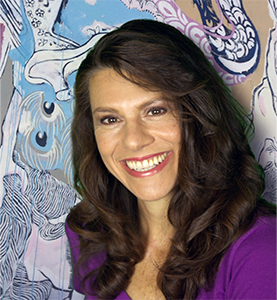 Thea Deley
We live in stressful times. Just glance at the day’s news headlines! Without realizing it, our nervous systems may be stuck in one of the stress responses: Fight, Flight, Freeze, or Fawn. This affects our brain’s ability to see the world—and other people—more clearly. When we train ourselves to look for kindness, we will see it all around us. This simple mindset shift brings more joy and connection to our lives, and an optimism that Humanists need if we want to affect change.
Thea spoke to us on October 23, 2022. For more info about Thea and her work, go to speranzahealingarts.com.
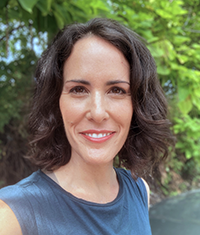 Lea Pinsky
How do you see? By color, line, narrative, or idea? Learn about the many ways to see with Art Encounter, a local arts organization that has been taking people to art and bringing art to people through educational programs for the public, youth, and seniors, to a vibrant mural program for the whole community. Engaging with art has a powerful impact in our lives! We experienced several works of art presented by Art Encounter’s Executive Director Lea Pinsky, and shared what art means to us.
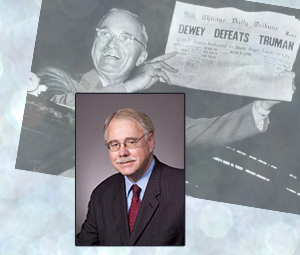 John Ungashick
Long-time EHS member John Ungashick discusses the circumstances of Harry Truman being selected as Franklin Roosevelt’s running mate in 1944, and his accession to the presidency in April 1945 after Roosevelt’s death. After a summary of Truman’s tumultuous first term, John describes his surprising victory over Republican Tom Dewey in the 1948 election.
 Pam Karlson
 Ray Berg
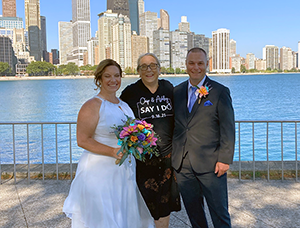 Katie Merrell
Important life transitions occur even during a global pandemic, so our EHS celebrants have continued to help people mark them through weddings, baby namings, and memorials over the past two years. Katie Merrell, one of our Humanist celebrants explained the fundamentals of being a Humanist celebrant and why it is an important part of our Society’s service to the broader Humanist community.
To learn more about our Humanist celebrants, see our ceremonies page. To find other Humanist celebrants in your area, see the listing at The Humanist Society.
Katie spoke to us on June 12, 2022.
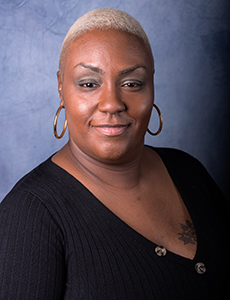 Mandisa L. Thomas
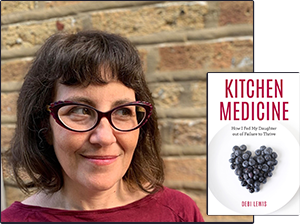 Debi Lewis
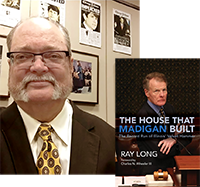 Ray Long
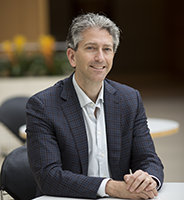 Jean-Pierre Dubé
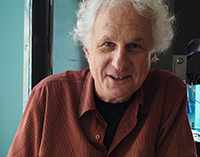 Rich Cahan
“Chicago Exposed: Defining Moments from the Chicago Sun-Times Photo Archive”
Richard Cahan, former picture editor for the Chicago Sun-Times, will talk about his new book, Chicago Exposed: Defining Moments from the Chicago Sun-Times Photo Archive. The book pairs the most eye-opening photographs taken over the past eighty years with short essays by photographers, reporters, historians and the subjects of these pictures. Their words offer insight into what the photograph, taken decades ago, means to Chicago now.
Rich spoke to us on March 6, 2022.
Miles Harvey
“King of Confidence: The Story of an 1840’s Charlatan”
Author, journalist, and creative writing professor at DePaul University Miles Harvey discusses his book, The King of Confidence: A Tale of Utopian Dreamers, Frontier Schemers, True Believers, False Prophets, and the Murder of an American Monarch. This is the riveting story of the most infamous American con man you’ve never heard of: James Strang, a self-proclaimed divine king of earth, heaven, and an island in Lake Michigan. Here he controlled one-fourth of the state of Michigan, establishing a pirate colony where he practiced plural marriage and committed theft, corruption, and fraud until his assassination in 1856.
Miles spoke to us on February 20, 2022.
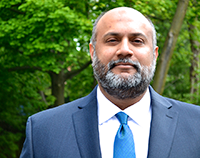 Omer Mozaffar
“Islamic Concepts of the Self and the Collective”
Omer Mozaffar, Muslim Chaplain at Loyola University in Chicago, explores the concept of the human self through the lens of belief as well as through a secular perspective, positioning Islamic concepts in the greater conversations in our society. He discusses ideas such as the individual’s relationship with and responsibilities to the collective.
Omer spoke to us on February 6, 2022.
 Chris Turley & Valerie Vidoni
“Shaping Our Greatest Resource: The State of the EHS Renovation”
Architect Chris Turley walks us through the current plans for renovating the building that has been home to our community for 25 years. He, and interior designer Valerie Vidoni, share drawings and illustrations showing the concepts and changes that will revitalize our space and bring us into the future, while celebrating the unique and quirky features of this fantastic building.
Chris & Valerie spoke to us on January 23, 2022.
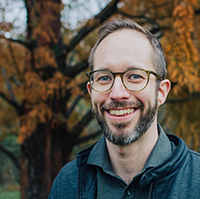 Chris Bail
“Breaking the Social Media Prism”
In an era of increasing social isolation, platforms like Facebook and Twitter are among the most important tools we have to understand each other. We use social media as a mirror to decipher our place in society but it functions more like a prism that distorts our identities, empowers status-seeking extremists, and renders moderates all but invisible. Professor Bail discusses his recent book, Breaking the Social Media Prism: How to Make Our Platforms Less Polarizing, which challenges common myths about echo chambers, foreign misinformation campaigns, and radicalizing algorithms, revealing that the solution to political tribalism lies deep inside ourselves.
Professor Bail spoke to us on January 9, 2022.
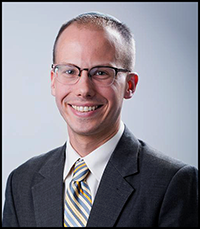 Peter Ganong
“The Impact of Macroeconomic Policies During Covid”
Professor Peter Ganong reviews his research on the effects of various macroeconomic policies undertaken during the pandemic. He explains how some policies differed from past choices and describes what we know about the impact of these policies on households’ behavior. He also evaluates the impact of the programs on spending, job finding, financial stress and wealth and draws out the lessons for anti-poverty policies in the future.
Professor Ganong spoke to us on December 12, 2021.
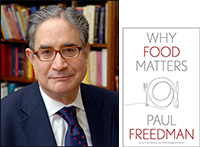 Paul Freedman
“Why Food Matters”
Obviously, food matters in the sense that we will die without it. Beyond its biological necessity, however, food tells us who we are. It is part of culture, memory and personal identity. In his new book, Why Food Matters, Dr. Paul Freedman chronicles the crucial role of food in the evolution of human identity and human civilizations. His talk will look at food as both a celebration and a marker of differences in gender, culture, and socio-economic status.
Professor Freedman spoke to us on December 5, 2021.
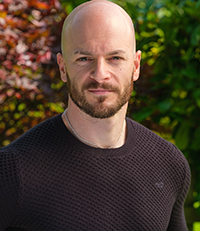 Nick Tiller
“Science and Pseudoscience in Health and Fitness”
The worldwide health and wellness industry is worth an estimated $4 trillion. While exercise and physical activity improve health and prolong life, lax regulations on the products and practices we’re sold have led to an industry founded on strong claims and weak evidence. Science has become subordinate to marketing campaigns that exploit our scientific ignorance and ingrained biases. As a result, the health and wellness industry is a breeding ground for pseudoscience. In this talk, Dr Nick Tiller lifts the lid on the commercial health and wellness industry and reframes it through the critical lens of scientific skepticism.
Nick spoke to us on November 21, 2021.
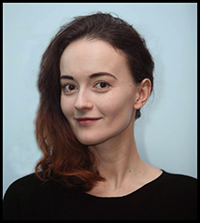 Olga Rudenko
“Understanding Ukraine: 30 Years of Turmoil”
Ukraine recently celebrated 30 years of independence. In this short time, the nation has endured two revolutions and an ongoing bloody war with Russia. It has also been drawn into U.S. domestic politics, where it played a role in the impeachment of Donald Trump. The rise of disinformation in Ukraine worsened during the COVID-19 pandemic, leading to the lowest vaccination rate in Europe. To help us understand this second-biggest post-Soviet nation, journalist Olga Rudenko describes Ukraine’s historical setting and takes us through its current challenges.
Olga spoke to us on November 14, 2021.
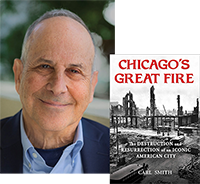 Carl Smith
“The Great Fire and the Emergence of Modern Chicago”
The Great Chicago Fire of October 8-10, 1871, is one of the legendary urban fires in history. It destroyed a third of the city, including the entire downtown and most of the North Side, leaving around 90,000 people instantly homeless. Carl Smith, eminent Chicago historian and author of Chicago’s Great Fire: The Destruction and Resurrection of an Iconic American City, discussed the Great Chicago Fire and the equally remarkable rebuilding, as well as the place of the fire in the city’s rapid rise and its emergence as the embodiment of urbanization in America.
Carl spoke to us on October 31, 2021.
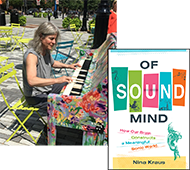 Nina Kraus
“Of Sound Mind: How Our Brain Constructs a Meaningful Sonic World”
In her new book, Of Sound Mind: How Our Brain Constructs a Meaningful Sonic World, Kraus uses her 30 years’ experience studying the interplay of the brain and sound to show for the first time that the processing of sound drives many of the brain’s core functions. She describes how the vast “sound mind” is inextricably woven into our thoughts, our movement, and our feelings. And she also explains how this sound-brain teamwork influences our lives on many different levels.
Nina spoke to us on October 24, 2021.
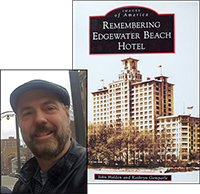 John Holden
“Remembering Edgewater Beach Hotel”
Co-author John Holden talks about the new book Remembering Edgewater Beach Hotel. Nothing epitomized the glamour and excitement of Chicago’s jazz age and war years like the fabled Edgewater Beach Hotel. Much more than a hotel, the Edgewater Beach was a world unto itself—the only urban resort of its kind in the nation. But the social upheaval of the 1960s, the ascendance of automobile culture, and rapid urban change led to its demise.
John spoke to us on October 17, 2021.
 Tracy Baim
“The Chicago Reader Turns 50: What’s Next for Local, Independent Journalism”
For 50 years, the Chicago Reader has been a fearless and innovative media voice in Chicago. Co-publisher and President Tracy Baim will tell us how the publication has navigated the challenging media environment, and how it will continue to pursue its mission to deliver an unflagging, unfiltered take on Chicago.
Tracy spoke to us on October 10, 2021
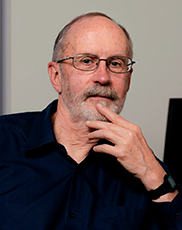 William B. Irvine
“Practicing Stoicism in the 21st Century”
Philosophy Professor William B. Irvine offered a refreshing presentation of Stoicism, showing how this ancient philosophy can direct us toward a better life in 2021 and beyond.
His recent book, The Stoic Challenge: A Philosopher’s Guide to Becoming Tougher, Calmer, and More Resilient is available now at your local bookseller.
Bill spoke to us on October 3, 2021.
The video of Professor Irvine’s talk is not available for re-watch. For more information him and his work, see williambirvine.com.
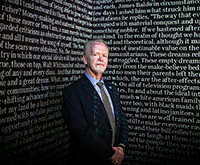 Casey Cranston
“American Writers Museum: Many Voices, One Vision”
Since its inception, the American Writers Museum in Chicago has been a product of many voices working together to create a space that celebrates the influence of writers on our history, culture, and daily lives. Museum President Carey Cranston will discuss the process and ethical issues around developing inclusive content.
Casey spoke to us on September 26, 2021.
 Sarah McAnulty, PhD
“Bringing Science to Students Worldwide with Skype a Scientist”
A lack of science literacy has been a growing problem in The United States for decades. Sarah McAnulty is tackling that problem with her science education nonprofit, Skype a Scientist. Sarah lays out the danger in ignoring science advocacy in everyday life and how her organization is addressing that problem for the future. She explains her approach in encouraging personal connections between scientists and others, and how these small connections can lead to big changes.
Sarah spoke to us on September 19, 2021.
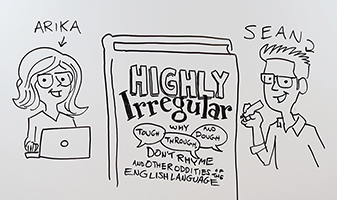 Arika Okrent & Sean O’Neill
“Highly Irregular: The Weirdness of English, Explained”
Irregular verbs, inconsistent spelling, phrases that don’t seem to follow the grammar rules, why isn’t English more orderly and logical? We don’t have to shrug and say “that’s just how English is.” English may be weird, but it’s not JUST weird. It’s weird in specific ways for specific reasons. Find out who is to blame for the weirdness of English.
Arika and Sean’s recent book Highly Irregular: Why Tough, Through, and Dough Don’t Rhyme And Other Oddities of the English Language is available at your local bookseller.
Arika & Sean spoke to us on September 12, 2021.  Ben Ost, EHS member and Professor of Economics at UIC
“The American Dream”
Is the American Dream dead? As the gap between the rich and poor expands, income mobility is more important than ever—and more difficult to attain. Ben Ost, EHS member and an associate professor of economics at UIC, will discuss long-term changes in income inequality and intergenerational mobility, and whether the American Dream should be called the Scandinavian Dream.
Ben spoke to us on August 8, 2021.
 Ray Berg, EHS member and professional software engineer
“Hacked!? Cybersecurity Without the Scare Tactics”
Hacking seems to be as common as the technology all around us. Is everyone at risk? How can anyone stay secure in the age of Ransomware and Powergrid hacks? Ray Berg, EHS member and professional software developer, will provide an overview of recent news stories alongside simple explanations of hacking principles. If “hacking” has you confused or keeps you from sleeping well at night…this is the talk for you.
Ray spoke to us on July 25, 2021.
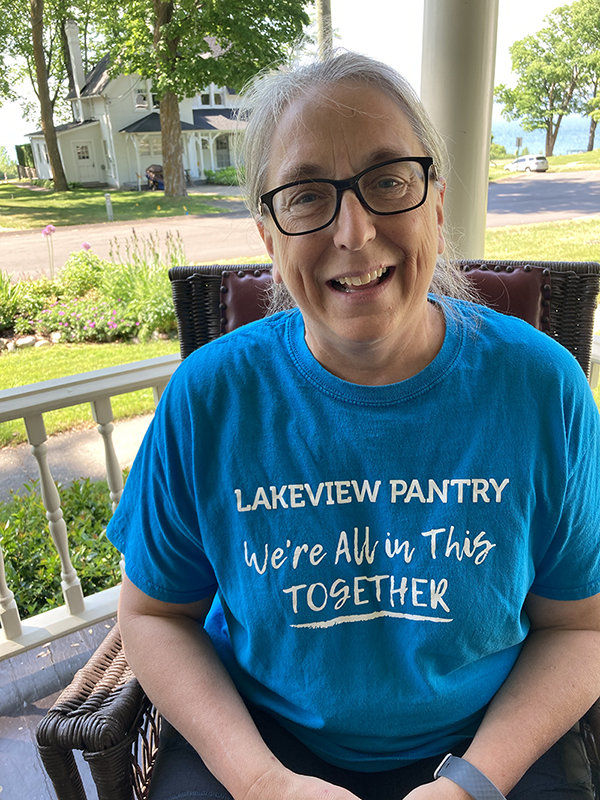 Katie Merrell, EHS Member & Volunteer at Lakeview Pantry
“Chicago Communities and Food Insecurity During COVID”
The rapid loss of jobs and income in 2020 led to a tremendous increase in food insecurity throughout the U.S. In Chicago, existing food pantries rapidly expanded to meet increased need, and a variety of mutual aid responses sprang up in communities across the city. This talk will examine the level of food insecurity faced by Chicago households and how traditional charities, like Lakeview Pantry, and new initiatives, like The Love Fridge Chicago, along with a wide range of mutual aid groups, created new ways to address this need.
Katie spoke to us on June 20, 2021.
 Ayelet Fishbach, Professor of Behavioral Science and Marketing at the University of Chicago
“Get it Done: Surprising Lessons from the Science of Motivation”
How can we protect our long-term goals from the influence of short-term motives or temptations? Ayelet Fishbach, a professor of Behavioral Science and Marketing at the University of Chicago, will discuss how behavioral science research can teach us ways to stay motivated and achieve our goals during these uncertain times. Focusing on the processes of self-control, she will review some best practices, including setting a goal, monitoring progress toward a goal, addressing multiple goals, and gathering social support.
Ayelet spoke to us on May 16, 2021.
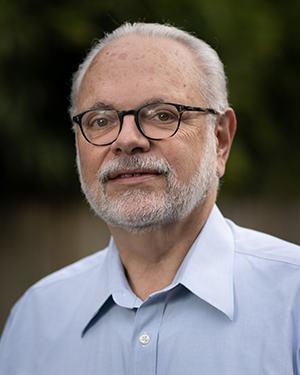 David Wessel, A Senior Fellow in Economic Studies at Brookings and Director of the Hutchins Center on Fiscal and Monetary Policy
“Speaking Truth to Power: Journalism and Social Media”
David Wessel, a Pulitzer Prize-winning journalist who spent 30 years at The Wall Street Journal is now at the Brookings Institution and a frequent contributor to NPR’s Morning Edition, will discuss how public intellectuals and journalists have had to adapt to the rise of social media and the shouting matches on cable TV. He will explain the challenges this poses to journalists and think tank scholars and the ways in which he has responded to the shortening attention spans of the public and the polarization in the society that has eroded common understanding of facts.
David spoke to us on May 2, 2021.
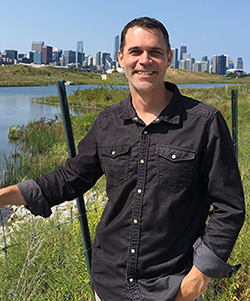 Gavin Van Horn, Creative Director and Executive Editor at the Center for Humans and Nature
“Shared Journeys with Trickster Coyotes”
Gavin Van Horn is the creative director for the Center for Humans and Nature, and author of The Way of Coyote: Shared Journeys in the Urban Wilds. In his book, Van Horn explores what it means to coexist with urban wildlife, often drawing from the wisdom of wildlife ecologist Aldo Leopold, Taoist philosopher Lao Tzu, and the North American trickster figure Coyote. His talk will focus on the relationship between humans and nature with emphasis on story and science, ecological loss and ecological reconciliation, and the role wildlife can play in waking us to a shared sense of place and fate. He will highlight the ways in which Coyote as Trickster may be an especially resonant archetype for this moment of change and social upheaval.
Gavin spoke to us on April 25, 2021.
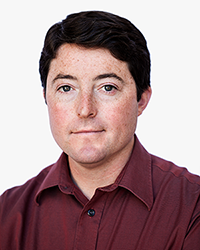 Andrew Shtulman, Professor of Psychology and Cognitive Science at Occidental College in Los Angeles
“Science vs. Intuition: Why Scientific Ideas Elude the Human Mind”
Scientific ideas are difficult to teach, difficult to learn, and difficult to accept as true because they contradict our intuitive theories of how the world works. Shtulman discussed what intuitive theories are, where they come from, and why they blind us to more accurate theories of the world.
His book, Scienceblind: Why Our Intuitive Theories About the World Are So Often Wrong, is available now.
Andrew spoke to us on April 18, 2021.
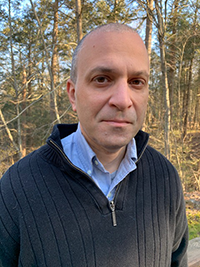 Jon Fasman, Author and U.S. digital editor for The Economist
“Liberty and Justice in an Age of Perpetual Surveillance”
Automatic license-plate readers. Facial recognition. Drones. Devices that trick our cellphones into revealing our texts, online browsing habits and location. American police have the technological capacity to build granular portraits of all of our lives. Jon Fasman discussed what can happen to our civil liberties when governments take control of these surveillance technologies. Can our democratic scaffolds prevent us from becoming more like China?
His recent book, We See It All: Liberty and Justice in an Age of Perpetual Surveillance, is available now.
Jon spoke to us on April 11, 2021.
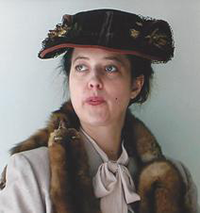 Leslie Goddard, award-winning actress and scholar
“Eleanor Roosevelt: A Living History Portrayal”
Leslie Goddard portrayed one of the most fascinating and influential public figures of the twentieth century. Born into wealth during America’s Gilded Age, Eleanor Roosevelt grew from shy, homely orphan into a confident, driven woman who championed progressive causes and human rights. Drawn from Eleanor’s own letters, diaries, newspaper columns, and other writings, Leslie’s thoroughly researched and engaging performance captures the warm, honest, and passionate American first lady and stateswoman.
Leslie spoke to us on April 4, 2021.
 March 28, 2021
Joseph Henrich, Chair of the Department of Human Evolutionary Biology at Harvard University
“WEIRD Minds: The Origins of Global Psychological Diversity”
A growing body of research has revealed substantial psychological variation among populations around the globe. In this talk, Dr. Joseph Henrich explored the origins of some of these different ways of thinking, feeling, and reasoning by looking at how our minds co-evolve culturally with our institutions, languages, and technologies. In particular, he considered how changes in the organization of families and marriage customs have altered people’s psychology. He also discussed the role of religions on family structures, psychology differences, and economic outcomes.
His book, The WEIRDest People in the World: How the West Became Psychologically Peculiar and Particularly Prosperous, is available now.
 March 21, 2021
Phil Zuckerman, professor of sociology and secular studies at Pitzer College in Claremont, California
“What It Means to be Moral“
Phil Zuckerman, a professor of sociology and secular studies at Pitzer College in Claremont, California, argued that morality does not come from God. Rather, it comes from us: our brains, our evolutionary past, our ongoing cultural development, our social experiences, and our ability to reason, reflect, and be sensitive to the suffering of others. Zuckerman states that secular and Humanistic morality is a better option when seeking to live ethically and make the world a better place. In this talk, Zuckerman will discussed the four main problems with religious and god-based morality, and then explained the foundations of secular morality and the promise of humanistic virtues.
His recent book, What It Means to Be Moral: Why Religion Is Not Necessary for Living an Ethical Life, is available now.
 March 14, 2021
Daniel Cooper, Director of Research for the Metropolitan Planning Council
“How Mass Incarceration Devastates Neighborhoods“
Violence in cities like New York and Los Angeles has fallen in recent years, but in many Chicago communities, especially since the start of the pandemic, shootings and violence continue at alarming rates. Meanwhile, residents of these same communities have endured decades of some of the highest rates of arrest, incarceration, and police abuse in the nation. The calls for defunding the police are a direct result of years of punitive approaches that have left residents worse off. Cooper explores policing and the punishment of disadvantage in Chicago, and a new vision for repairing urban neighborhoods.
His book, The War on Neighborhoods: Policing, Prison, and Punishment in a Divided City, is available now.
 March 7, 2021
Kamala Lopez, Filmmaker, actress, activist, and president of the pro-ERA organization Equal Means Equal
“The Equal Rights Amendment: Finally Ratified, What’s Next?“
In January of 2020, Virginia’s new congress delivered the brass ring to American women by ratifying the equal rights amendment after close to a century of struggle. As this 38th and final state completed the amendatory process, the victory should have sparked a year of celebration of the adoption of “equality regardless of sex” in all fifty states. Instead it’s become a singularly male pissing contest, both in the courts and in congress, and women still do not have guaranteed equal protection under our laws. Kamala Lopez works with hundreds of women’s organizations across the country to educate and activate their constituencies to take action. In her talk, she told us about her work implementing the “3-State Strategy”, and what her next steps will be including the historic lawsuit, Equal Means Equal, et al vs. David S. Ferriero, to finally ensure adoption and enforcement of the ERA.
 February 28, 2021
Emily Balcetis, PhD, an associate professor of psychology at New York University
“How Successful People See the World“
When it comes to setting and meeting goals, we may see, quite literally, our plans, our progress, and our potential in the wrong ways. But there is great power in these misperceptions. We can learn to leverage perceptual illusions if we know when and how to use them to our advantage. Drawing on her own cutting-edge discoveries in vision science, cognitive research, and motivational psychology, Emily Balcetis shared the behavioral and brain science of how to cultivate untapped tools for goal pursuit that call upon the power of sight. She shared some unique accounts of the perceptual habits, routines, and practices that artists, entrepreneurs, elite athletes, and the author herself have used to set and meet their most ambitious goals.
Emily’s book, Clearer, Closer, Better: How Successful People See the World, is available now.
February 21, 2021
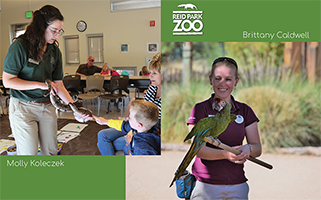
Brittany Caldwell and Molly Koleczek,
Education Specialists at the Reid Park Zoo in Tucson, AZ
“Zoo 101: Behind the Scenes at the Reid Park Zoo“
Caring for the animals that call the Zoo their home is a big job! Zoo educators, Brittany Caldwell and Molly Koleczek, shared how they care for their resident animals and why what they do is so important. They introduced us to some of the animal ambassadors of the Reid Park Zoo in Tucson, AZ. The animal ambassador group is composed of a variety of birds, mammals, reptiles, and invertebrates, and each need special care and training to be ambassadors for the zoo’s Education Department. During the livestream, Brittany and Molly answered our questions about their work with the animals and Reid Park Zoo’s role as a conservation organization, and also how zoos and scientists work to protect wild animals and wild places.
 February 14, 2021
Brian Keating, Professor of physics at the University of California, San Diego
“Losing the Nobel Prize: A Cautionary Cosmic Tale“
Brian Keating, award-winning cosmologist at the University of California San Diego, seemed destined for a Nobel Prize in physics. After inventing and deploying a telescope (aka BICEP) at the U.S. South Pole Research station, he received multiple awards from the National Science Foundation and the White House. His pursuit of that illustrious prize was stymied, however, when the data from his experiment turned out to be caused by interstellar dust.
Dr. Keating shared some of the difficulties in exploring the beginnings of the universe, moments after the Big Bang, and the obstacles and impediments faced in a reach for becoming a Nobel Laureate. He discussed how his journey of self-discovery and introspection opened his eyes to the ways in which the Nobel Prize process itself is broken, diverging from what was originally intended by its founder, Alfred Nobel.
His book, Losing the Nobel Prize: A Story of Cosmology, Ambition, and the Perils of Science’s Highest Honor, is available now.
 February 7, 2021
Lee McIntyre, Research Fellow at the Center for Philosophy and History of Science at Boston University
“How to Talk to a Science Denier“
Dr. Lee McIntyre, Research Fellow at the Center for Philosophy and History of Science at Boston University, challenges the claim that trying to convince a science denier with facts will only backfire. Indeed, the latest research shows that this is mistaken, and that there are effective techniques that can be used to keep someone from becoming a science denier. These strategies can even help people overturn those mistaken beliefs once they are formed. The secret lies in recognizing that even empirical beliefs may be held for reasons that have nothing to do with evidence. McIntyre will explain that the best way to convince someone in this case is not to berate them, but rather to engage them in an examination of the cognitive and normative reasons why they reject factual evidence in the first place.
McIntyre’s books, The Scientific Attitude: Defending Science from Denial, Fraud, and Pseudoscience, Post-Truth, is available now.
 January 31 2021
Benjamin Bergen, professor in the Cognitive Science Department at UC San Diego
“The Science of Swearing from the Author of “What the F”“
Nearly everyone swears—in pain, inebriation, anger, or joy. And yet adults censor themselves in public and even punish children for profanity. Swearing, it seems, is an intimate part of us that we decide to selectively deny. But scientists have begun to look under the hood of profanity and the results are remarkable. Cognitive scientist and author Benjamin Bergen discussed the surprising science behind swearing. How can stroke patients left otherwise speechless still swear fluently? Why do words like “zounds” or more recently “sucks” that were once taboo eventually lose their sting? The cognitive science of profanity opens a new window onto how our brains process language and what gives words the power they have.
Ben’s book, What the F: What Swearing Reveals About Our Language, Our Brains, and Ourselves, is available now
 January 24, 2021
Vashon Jordan, independent local photographer
“Inside the Chicago Protests: A Joyful Revolution“
From May through September 2020, 21-year-old, independent photographer, Vashon Jordan Jr. captured over 17,000 photographs at dozens of demonstrations across Chicago, Illinois, to provide a tangible, authentic, visual record. These protests were sparked by the deaths of Breonna Taylor, George Floyd, and countless other Black people, unjustly murdered by white police officers across the country. Despite being spurred by violence, and occurring during the COVID-19 pandemic, this revolution was built on peace, love, and joy, and led by the youth.
In his talk, Jordan shared the creation of his book, Chicago Protests: A Joyful Revolution, which showcases over 100 photos from more than 35 different demonstrations, community events, and moments that shaped the eventful Chicago summer of 2020.
 January 17, 2021
Dr. Robert Zubrin, noted author and the founder of The Mars Society
“The Case for Space: A Future of Limitless Possibilities“
Robert Zubrin, a visionary astronautical engineer and author best known for his advocacy of human exploration of Mars, discussed the current revolution in spaceflight led by entrepreneurs such as Jeff Bezos, Sir Richard Brandon, and Elon Musk. Dr. Zubrin explained how these billionaires are filling a huge void left by governments that have had to cut funding for space missions, and what it means for our knowledge, our survival, our freedom, and our future.
 January 10, 2021
Dr. Hector Garcia, Assistant Professor of Psychiatry, University of Texas Health Science Center at San Antonio
“The Evolutionary Roots of Political Partisanship“
Politics can elicit powerful, irrational, sometimes volatile emotions. Through the lens of evolutionary science, Dr. Garcia offers a novel perspective on why we hold our political ideas, and why they are so often in conflict. Garcia reveals how even the most complex political processes can be traced back to our basic drives to survive and reproduce—including the policies we back, whether we are liberal or conservative, and whether we are inspired or repelled by the words of a president.
Dr. Garcia’s book, Sex, Power, and Partisanship: How Evolutionary Science Makes Sense of Our Political Divide, is available now.
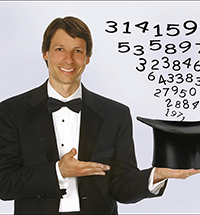 January 3, 2021
Arthur Benjamin
“Mathemagic!”
Dr. Arthur Benjamin performs high-speed mathematical calculations that seem like magic, and he calls this special talent Mathemagic. His fascinating online presentations show him competing with a calculator by using his academic specialty of combinatorics. In his talk, Dr. Benjamin demonstrated and explained some of these skills while describing why he advocates that the focus of Math higher education should be in statistics rather than calculus.
 December 13, 2021
Heather McGhee
“Racism Has a Cost for Everyone“
Racism is the common denominator in our most vexing public problems, and its legacy in the United States is deep and profound for everyone. Racist lenses have infiltrated and negatively impacted people in every system we rely on, including many who are inside philanthropy, cultural enterprise, and the creative economy. Ultimately, racism makes all of these systems poorer. In this keynote conversation, thinker, commentator, and well-known public policy and economic justice scholar Heather McGhee broke down the far-reaching and detrimental effects of racism in both public and private policy. She presented a vision for how we can collectively move towards something that is more equitable and just and serves all of us better, including those who carry the most privilege.
Heather’s book, The Sum of Us: What Racism Costs Everyone and How We Can Prosper Together, is available now.
 December 6, 2020
Tonja Jacobi, Professor of Law, Northwestern Pritzker Law School
“How Justices’ Questions and Jokes Can Predict Supreme Court Rulings“
Drawing on her extensive research, Northwestern University Professor of Law Tonja Jacobi presented empirical evidence of certain patterns that emerge in Supreme Court oral arguments. Among these are: biases against women, ideologically driven decision-making, and dominance behavior. She showed that these patterns are systemic enough that predictions can actually be made about how Supreme Court Justices will vote in subsequent cases. She offered how one can guess how each Justice will vote by noting which attorneys the Justice questions the most, along with the Justice’s comments and interruptions, and even their jokes.
 November 22, 2020
Michael De Dora, Washington Advocacy Manager for the Committee to Protect Journalists
“Keeping the Press Free: Attacks on Journalism at Home and Abroad“
Each year, hundreds of journalists are assaulted, imprisoned, or killed. These attacks on the news media in the U.S. and throughout the world have undermined confidence in the press. Since its founding in 1981, the Committee to Protect Journalists (CPJ), an independent, nonprofit organization, has defended journalists on the front line who risk their lives to bring information to the world.
Michael De Dora, CPJ Washington advocacy manager, will tell us about their mission to defend journalists and fight for freedom of the press. In 2019 alone, CPJ’s advocacy work helped lead to the early release of at least 80 imprisoned journalists.
 November 15, 2020
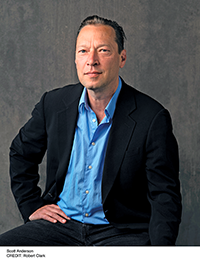
Scott Anderson
“Racism Has a Cost for Everyone“
Journalist and author Scott Anderson told us about his book, The Quiet Americans: Four Cia Spies at the Dawn of the Cold War — a Tragedy in Three Acts. In it, he chronicles the exploits of the CIA’s four original spies: Michael Burke, Frank Wisner, Peter Sichel, and Edward Lansdale. The four ran covert operations across the globe, trying to outwit the ruthless KGB in Berlin, parachuting commandos into Eastern Europe, plotting coups, and directing wars against Communist insurgents in Asia.
It’s a dark tale exposing the contradictions that made up America’s foreign policy from post World War II through the mid-1950s. During this time, America’s obsession with fighting Communism resulted in undermining democratically-elected governments around the world. Anderson says the result was the loss of America’s moral standing internationally.
Scott’s book, The Quiet Americans: Four Cia Spies at the Dawn of the Cold War — a Tragedy in Three Acts, is available now.